

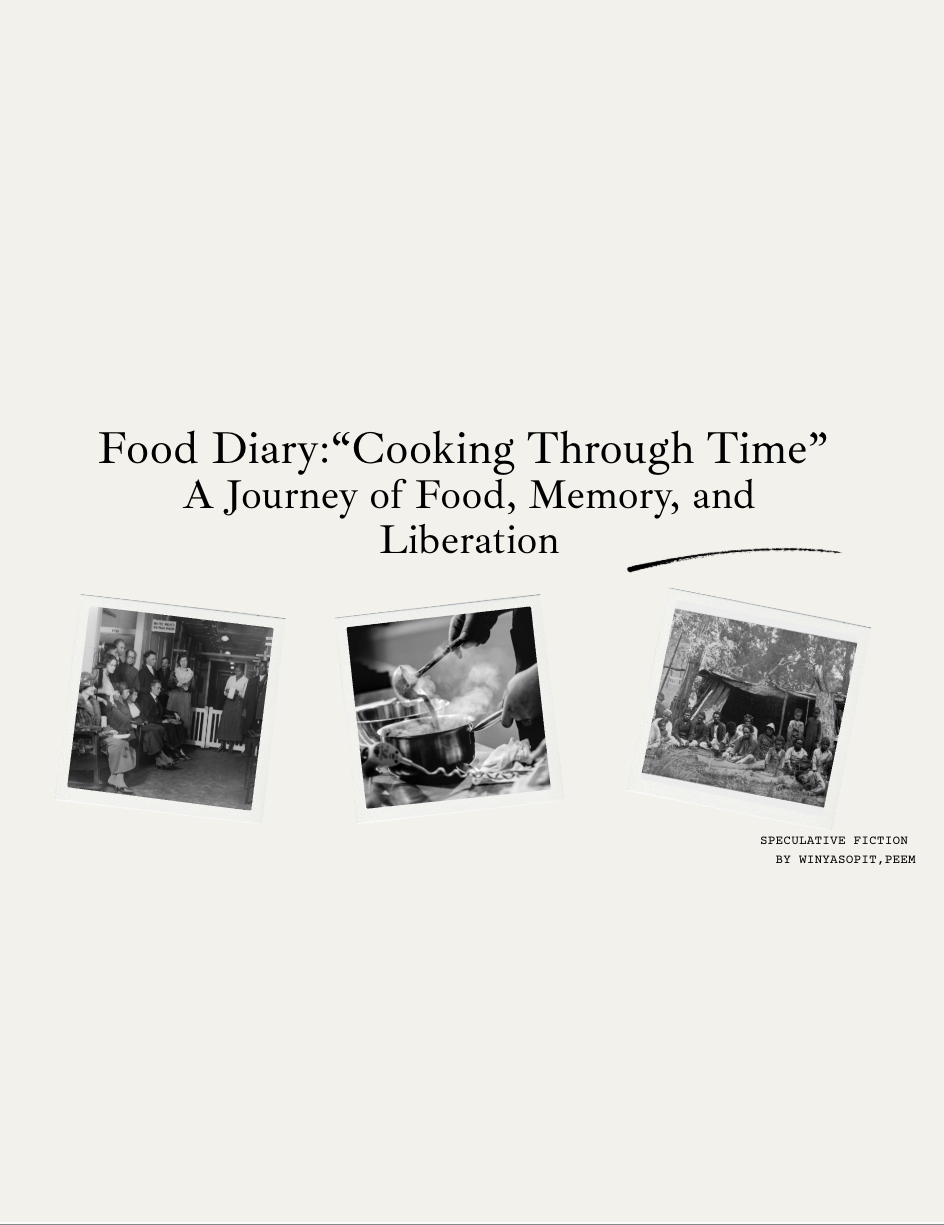
Food Diary: “Cooking Through Time”
A Journey of Food, Memory, and Liberation
Learning History Through Cooking and Fiction
Overview
A speculative cookbook that reimagines learning through food, memory, and the body. This project explores histories of race, identity, and belonging through sensory experiences, inviting learners to taste, feel, and embody the past.
As part of an alternative curriculum that challenges traditional teaching, it moves beyond lectures and text-based knowledge into taste, smell, emotion, and storytelling. Food becomes the curriculum, and the body becomes the classroom.
Through a time-travel narrative, each chapter immerses learners in a different historical era, where cooking and eating become ways of understanding lived experiences, trauma, resilience, and identity—shifting learning away from abstraction and into something deeply felt
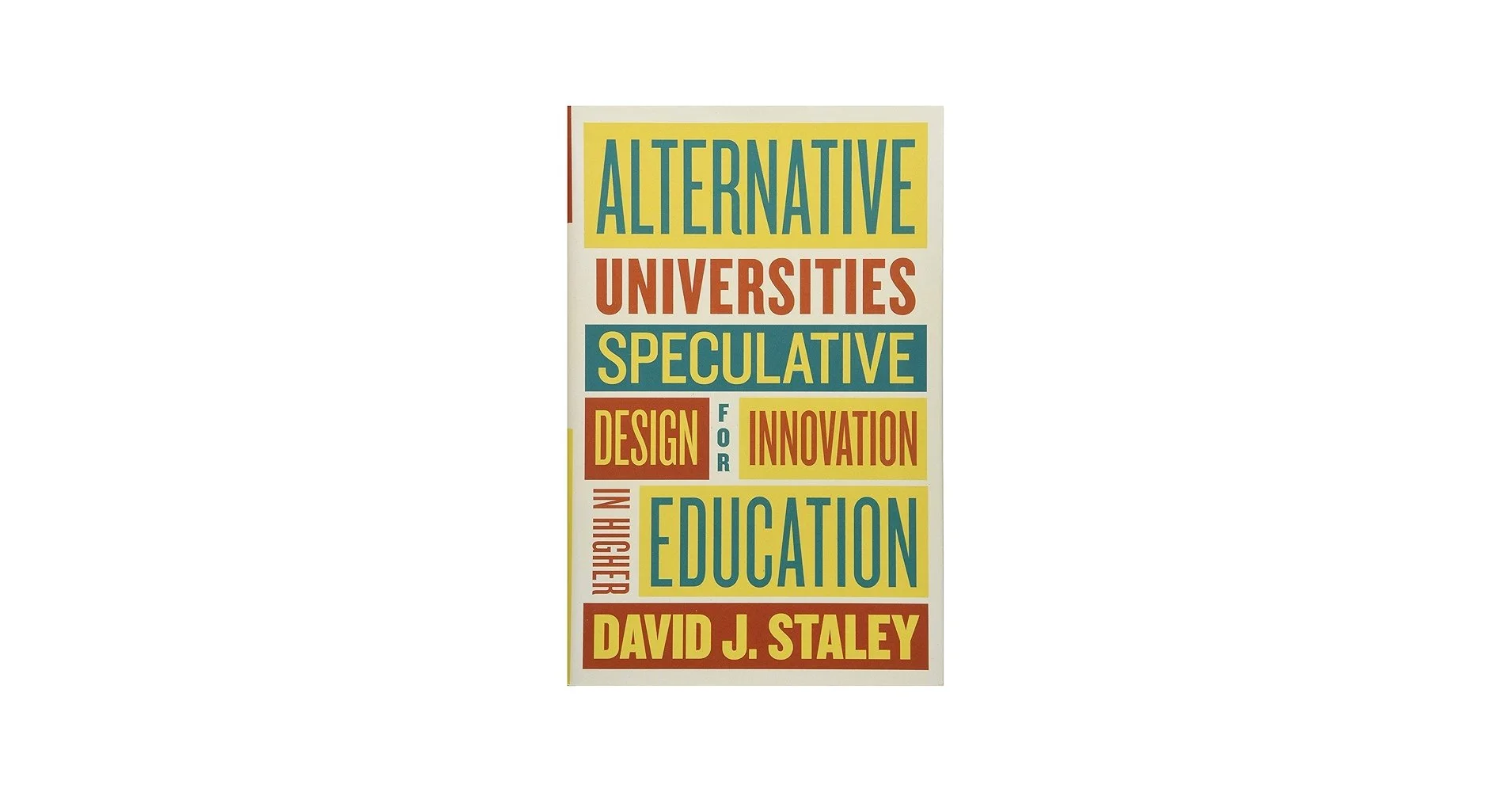
Inspiration | University of Body by David Staley
A speculative cookbook that reimagines learning through food, memory, and the body. This project explores histories of race, identity, and belonging through sensory experiences, inviting learners to taste, feel, and embody the past. As part of an alternative curriculum, it challenges traditional teaching that prioritizes lectures, texts, and passive knowledge transfer. Instead, it positions learning as experiential and embodied—where meaning is constructed through interaction, emotion, and the senses. By engaging taste, smell, and storytelling, this approach makes complex histories more accessible, personal, and deeply human.
This work is inspired by David Staley’s concept of the University of the Body, which argues that learning should move beyond the mind and into physical, sensory experience. Here, food becomes the curriculum, and the body becomes the classroom. Through a time-travel narrative, each chapter immerses learners in a different historical era, where cooking and eating become ways of understanding lived experiences, trauma, resilience, and identity. In doing so, learning shifts away from abstraction and into something felt—transforming education into an act of empathy, reflection, and embodied understanding.
Using Food to tell a Story
This speculative cookbook is written with care and humility, acknowledging histories of colonization, slavery, and racial injustice. Cooking Through Time blends storytelling, food, and history to explore anti-racism through sensory learning. Inspired by embodied learning, it invites readers to experience history through taste, memory, and emotion rather than traditional lectures.
Each volume travels through key eras of American racial history, using food as a doorway to understanding lived experiences. The final volume reflects my own identity and migration, connecting personal narrative to broader histories. The project ends with a liberatory reflection, encouraging new ways of learning, belonging, and imagining more equitable futures.
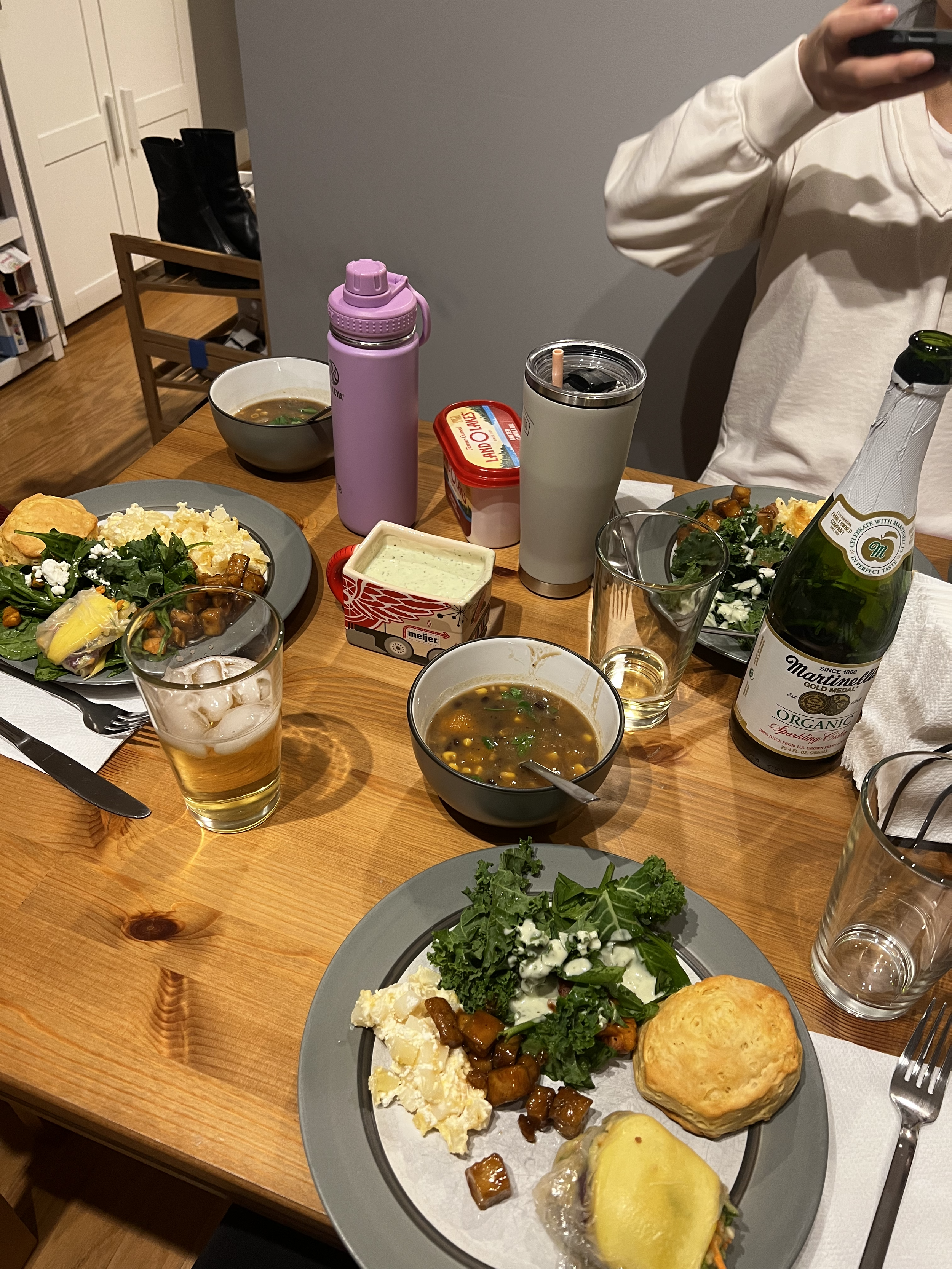
Three Sister Soup and Conversations
Food use as a tool for Future Forward Thinking
Food is central to this project because it is an embodied experience—something we see, smell, taste, and feel. It allows learning to move beyond reading into sensory, experiential understanding of history, identity, and culture. The recipes are not traditional recreations, but reimaginings. Each dish reflects future forward thinking—asking how historical foods might evolve today while still honoring their original meaning.
For example, collard greens, symbolizing resilience in Black communities, are reimagined as collard green stuffed tofu in ginger coconut broth, blending tradition with ideas of adaptability and healing. Similarly, chicken and dumplings become a fusion dish representing unity between Black and Asian communities, with flavors like miso and chili oil symbolizing shared survival. Each recipe bridges past and present, preserving cultural meaning while imagining new forms of identity, resilience, and nourishment for the future.

Let’s Read - Chapter 1
Indigenous Land: “Corn Soup for Remembering”
Recipe 1: Three Sisters Soup”
“A bowl of Rememberance”