


Digital Assessment in Online Learning
Designing meaningful assessments that help students demonstrate understanding, apply knowledge, and receive clear feedback in digital learning environments.
How Digital Assessment Supports Learning
Assessment is an essential component of any learning module. In digital learning environments, assessments allow instructors to measure student understanding while also supporting active learning and reflection. Well-designed assessments help students apply concepts, practice skills, and receive feedback that guides their progress throughout the course.
Digital assessment also increases flexibility and accessibility. Students can demonstrate their learning in multiple formats such as written responses, discussions, quizzes, and multimedia submissions. This variety allows instructors to evaluate different types of learning outcomes while supporting diverse learning styles.
Designing Effective Digital Assessments
-
When I design digital assessments, I focus on creating clear, structured experiences that help students demonstrate their understanding. My goal is to ensure that every assessment aligns with the learning objectives and supports meaningful learning rather than simply measuring completion.
-
Providing clear instructions and transparent expectations is essential for successful digital assessments. Students should understand what is required, how to submit their work, and what criteria will be used to evaluate their performance.
To support this, I include:
• Clear instructions and submission guidelines
• Structured prompts or guiding questions
• Examples or models when appropriateThese elements reduce confusion and allow students to focus on demonstrating their knowledge.
-
Each assessment I design is aligned with the learning outcomes of the module or course. This ensures that assessments measure the skills and knowledge students are expected to develop.
Different assessment formats—such as written assignments, discussions, quizzes, or multimedia submissions—allow students to demonstrate their learning in meaningful ways.
-
Clear rubrics are an essential part of my assessment design. Rubrics help communicate expectations, provide consistent evaluation criteria, and guide students toward successful performance.
Well-designed rubrics allow students to understand how their work will be assessed and what they can do to improve.
Below are examples of rubrics I have created to support clear expectations and meaningful assessment in digital learning environments.

Types of Digital Assessments (Canvas)
Online learning platforms allow instructors to use multiple assessment methods within a learning module. Each type of assessment serves a different purpose in evaluating student understanding and engagement.
01 | Written Assessment - Case Analysis
Written assignments allow students to analyze ideas, develop arguments, and demonstrate deeper understanding of course concepts. These assignments often involve essays, reflections, or research-based responses that require students to apply what they have learned.
Assessment Description:
An example of a written case study assignment from a business school firm and industry analysis course, where students evaluate a real-world market scenario and present their analysis using course frameworks and quantitative reasoning.
(click image to view assignment)
Client
Georgetown Course - BADM-6505 Firm Analysis and Strategy
Year
2025

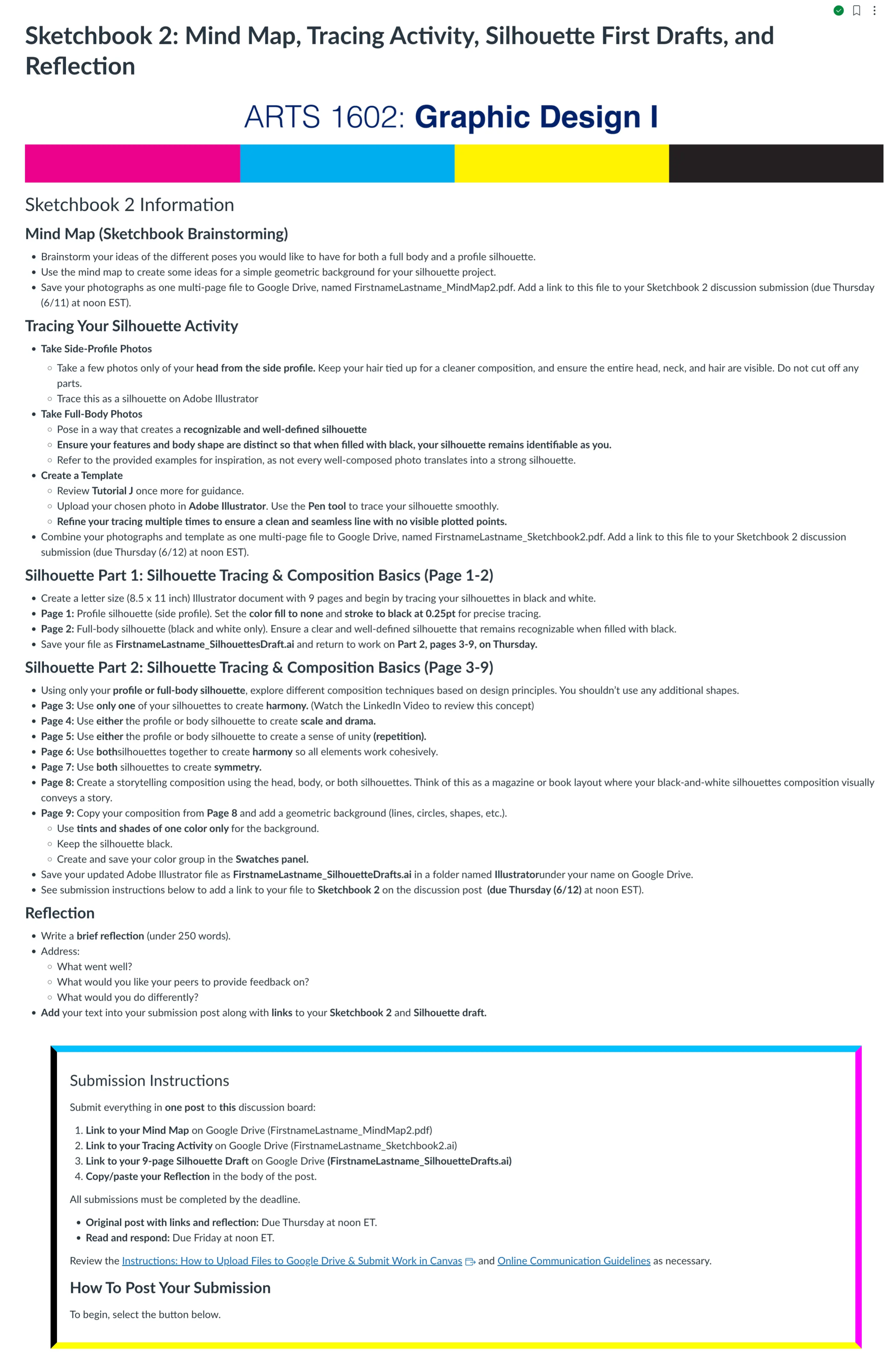
02 | Discussion Boards - MindMap and Sketchbook Sharing
Discussion boards encourage interaction and collaborative learning. Students respond to prompts, share perspectives, and engage with peers. This type of assessment helps build community while allowing students to reflect on course topics.
Assessment Description:
A discussion-based assignment from a Graphic Design course where students upload their sketchbook work, silhouette drafts, and reflections, then engage in peer critiques. A detailed rubric evaluates creativity, execution, reflection, and the quality of peer feedback.
(click image to view assignment)
Client
Georgetown Course - ARTS-1502 Graphic Design Summer Online
Year
2025
03 | Quizzes
Quizzes are commonly used as formative assessments to check student understanding of key concepts. They provide immediate feedback and help students review important material before moving on to the next topic.
Assessment Description:
A self-assessment knowledge check quiz from a nursing pharmacology course that allows students to review key concepts through multiple assessment formats, including multiple choice, matching, and fill-in-the-blank questions.
(click image to view assignment)
Client
Georgetown Course - NURS 2006: Pharmacology Summer Online (Nursing School)
Year
2025

04 | Video Submission
Video assessments allow students to demonstrate communication skills, presentations, or applied knowledge. This format is particularly useful for language learning, project presentations, or reflective assignments.
Assessment Description:
A video journal assignment where ESL students record a short video using the past simple tense to describe their activities. Students submit their videos to a discussion board and engage in peer feedback, with a rubric assessing grammar accuracy, pronunciation, sentence structure, and presentation.
(click image to view assignment)
Client
APILS Schools Group - 16 weeks bi-synchronous 12 tense course
Year
2025