Welcome to Cornucopia College

Located in Billings, Montata
About us
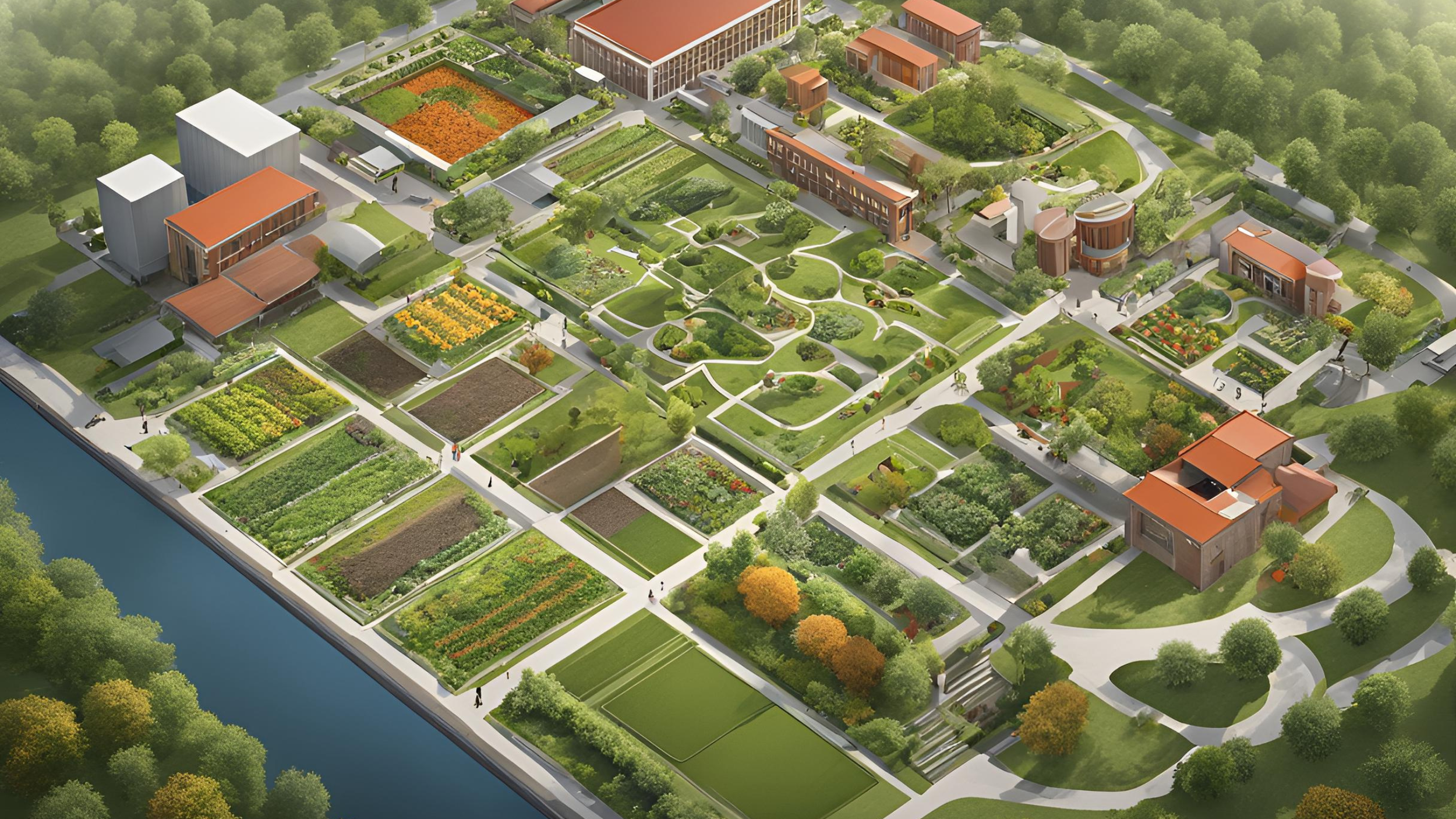
Cornucopia College is a speculative alternative university designed to challenge traditional higher education models by centering experiential learning, sustainability, and community integration. Developed as a systems-level design project, the university reimagines how curriculum, student experience, assessment, and financial structures can work together to address inequities in education, food systems, and environmental stewardship. Rather than separating theory from practice, Cornucopia College integrates learning across the farm, kitchen, classroom, and community—creating a holistic model for equitable, real-world education.
The Problem This Design Responds To
Traditional higher education often:
Separates learning from real-world application
Prioritizes content coverage over lived experience
Reproduces inequities through cost, access, and rigid structures
Treats sustainability and climate change as add-ons rather than core systems
Cornucopia College was designed as a response to these structural gaps, positioning climate change and food systems as wicked problems that require interdisciplinary, experiential, and community-based solutions.
Design Principles That Anchor the University
Experiential Learning
Learning is grounded in doing. Students engage directly in farming, cooking, logistics, policy analysis, and business operations as part of their academic coursework
Collaborative Learning
The university is embedded within local food systems. Students learn alongside farmers, chefs, policymakers, and community partners, emphasizing collaboration over competition.
Sustainability
Sustainability is not a topic—it is the infrastructure. Campus design, curriculum, energy use, food production, and waste systems are all aligned with environmental responsibility and long-term resilience
What Makes This a System Design and Not Just a School?
This project was designed by recognizing that education does not exist in isolated parts. Learning outcomes, student experience, assessment, funding, and long-term growth are deeply interconnected, and decisions in one area inevitably shape the others. Rather than treating these elements as separate components, this design approaches the university as a living system—where curriculum, experience, evaluation, and sustainability work together to support equity, resilience, and meaningful impact from the outset.
-
The curriculum is structured around a farm-to-table framework that allows students to understand food systems as interconnected processes rather than isolated subjects. A shared core builds common systems literacy, while focused concentrations enable students to develop depth in areas such as climate, policy, business, or culinary practice. This structure ensures both interdisciplinary thinking and purposeful specialization.
-
Student wellbeing is treated as a foundational design element rather than an add-on. Health, rest, physical movement, and community engagement are intentionally embedded into the academic calendar and daily routines. By designing for the whole learner, the institution creates conditions that support belonging, resilience, and sustained engagement.
-
Assessment is grounded in collaborative, real-world applications that reflect how learning functions beyond the classroom. Students demonstrate understanding through shared projects—such as operating farmer’s market booths—where learning, decision-making, and accountability intersect. Continuous feedback loops emphasize growth and mastery over performance alone.
-
The financial structure is designed to reduce overreliance on student tuition by integrating multiple revenue streams. Farm production, certificate programs, grants, and strategic partnerships contribute to institutional sustainability while reinforcing the learning mission. This diversified model supports long-term accessibility and equity.
-
Scalability is approached as values-driven growth rather than simple expansion. The model supports global campuses, online offerings, and a rotating “Nomad University” experience while maintaining commitments to experiential learning and sustainability. This ensures the institution can evolve without compromising its foundational principles.
Why This Project Matters
Cornucopia College demonstrates how intentional learning design can be used to reimagine higher education as a more equitable, humane, and sustainable system.
By aligning pedagogy, infrastructure, assessment, and finance around shared values, this project illustrates how educational institutions can move beyond incremental reform toward meaningful systemic change.